
How Much Money Do You Need to Retire in India After 20 Years?
Estimate retirement savings needed in India after 20 years considering inflation and lifestyle.
Mar 06, 2026
Wealth


Managing money doesn’t need to be complicated. Many people fail with finances not because they lack income, but because they lack structure. The 70-20-10 rule offers a simple, realistic, and human approach to money management that focuses on balance rather than restriction. It doesn’t demand perfection or complex budgeting systems. Instead, it creates clarity.
The beauty of the 70-20-10 rule lies in its simplicity. It divides your income into three clear parts, giving every rupee or dollar a purpose. This structure removes confusion, reduces stress, and creates a healthy relationship with money. It helps people move from financial chaos to financial control without feeling trapped by rigid rules.
Balance your money today, and your future will balance itself.
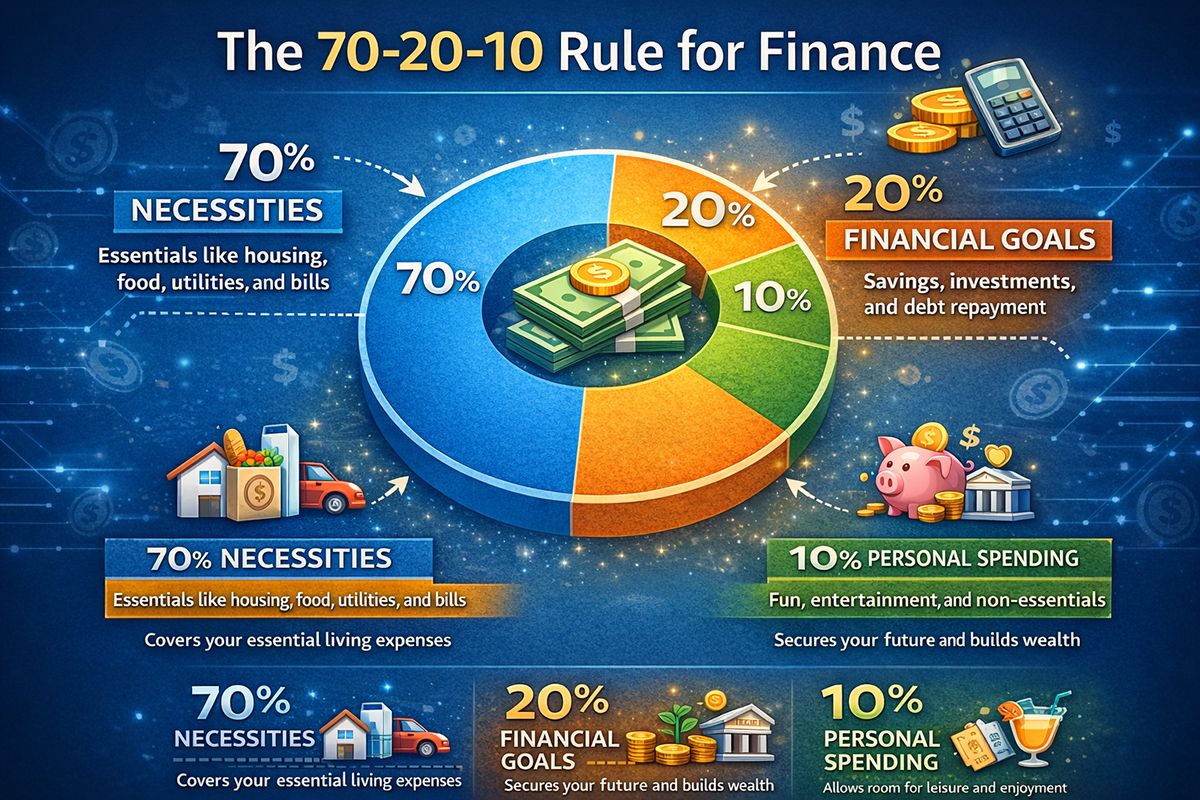
The 70-20-10 rule is a basic financial framework that divides income into three categories: living expenses, financial growth, and personal enjoyment. Seventy percent of income is used for necessities and daily living. Twenty percent is dedicated to future financial security. Ten percent is reserved for personal spending and lifestyle enjoyment.
This structure works because it respects both responsibility and reality. It allows people to live their lives today while still preparing for tomorrow. Money becomes organized without becoming suffocating.
The largest portion of income naturally goes toward survival and stability. Housing, food, transport, utilities, education, healthcare, insurance, and essential bills fall into this category. The 70% section represents your basic lifestyle structure.
This part of the rule teaches discipline, not deprivation. It encourages people to live within their means without feeling restricted. When daily expenses stay within control, financial stress reduces automatically. The goal is not to live cheaply, but to live sustainably.
When people exceed this 70%, financial pressure builds. Lifestyle inflation, unnecessary upgrades, and emotional spending often push expenses beyond healthy limits. The rule helps create boundaries that protect long-term stability.
This portion is the backbone of long-term security. The 20% is dedicated to savings, investments, emergency funds, and debt repayment. It represents protection, growth, and independence.
Saving creates safety. Investments create growth. Debt repayment creates freedom. Together, they form financial security. This section is what transforms income into wealth and effort into stability.
Many people ignore this part of money management because the future feels distant. But financial stress in later life is often the result of neglecting this 20% early on. Consistency matters more than amount. Even small contributions, done regularly, build powerful long-term results.
Money is not only for survival and saving — it is also for living. The 10% section allows room for joy, entertainment, hobbies, travel, and personal pleasure. This prevents burnout and financial frustration.
Without this category, people often feel restricted and eventually break their financial discipline through impulsive spending. The 10% creates balance. It allows enjoyment without guilt and spending without regret.
Healthy finance is not about punishment — it’s about balance. This portion protects mental well-being as much as financial well-being.
Most financial systems fail because they are too complex or too strict. The human mind resists complicated rules and extreme control. The 70-20-10 rule works because it is simple, flexible, and realistic.
It creates structure without pressure and discipline without fear. People feel in control instead of trapped. This emotional comfort is what makes the system sustainable.
Money management is more psychological than mathematical. A system that feels safe is more likely to be followed.
The rule is a guide, not a law. Life situations differ. Income levels vary. Responsibilities change. Some months may require adjustment. What matters is direction, not perfection.
People with high rent may adjust percentages. People with high debt may focus more on the 20%. The core principle remains the same: balance present needs, future security, and personal happiness.
Financial systems must serve life — not control it.
Over time, the 70-20-10 rule builds discipline, confidence, and clarity. It reduces stress, improves decision making, and creates financial awareness. People stop reacting to money and start directing it.
Savings grow. Debt reduces. Stability increases. Confidence improves. Money becomes a tool instead of a source of fear.
The biggest benefit is peace of mind. Financial order creates mental freedom.
This rule is not about wealth alone. It is about balance. It teaches responsibility without sacrifice and enjoyment without guilt. It creates harmony between today and tomorrow. true financial success is not about how much you earn but it’s about how well you manage what you have. The 70-20-10 rule turns income into structure and effort into stability.
Estimate retirement savings needed in India after 20 years considering inflation and lifestyle.

How blockchain is transforming trust, transparency, and efficiency in modern financial systems.

Gold is a stable, long-term investment for wealth protection and security.

Simple habits to organize money, reduce stress, and build long-term financial stability.

Moringa offers powerful nutrition, health benefits, versatile uses, but also potential side effects.

Simple natural remedies help eliminate cockroaches safely and keep homes clean and pest-free.

Vitamin C supports immunity, skin health, and healing while preventing deficiency-related health issues.